
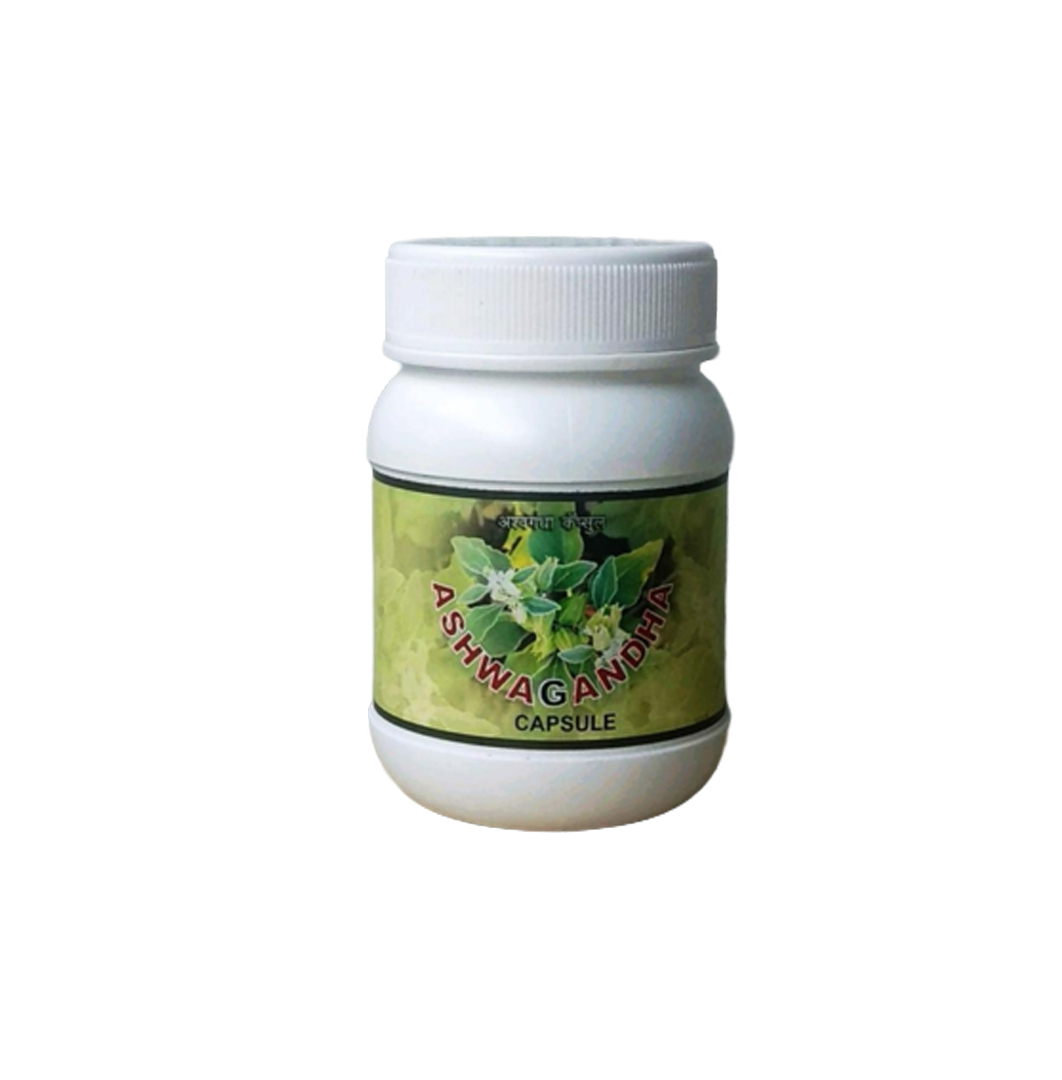
Description
It’s a classical Ayurvedic Medicine good old reference from Ayurvedic Book Bhavaprakah Nighantu made into capsule form.
Ingredients – Composition: Each Capsule is derived from
| Sr.No. | Ingredients | Part used | Qnty |
|---|---|---|---|
| 1 | Ashwagandha (Withania somnifera) | (Roots) | 500 mg |
Category – Internal medicine in the Capsule form 500 mg Indication – Kshaya(emaciation), Dourbalya (Weakness), Vataroga (Neuromuscular Disorders) Shotha(Edematous conditions), klaibya (Impotency) and as Rasayana (anti-oxidant)
Dosage – 2 capsule thrice a day or as per the direction of physician.
Contraindication – Obese persons who are already overweight long term use not recommended, Person known allergic to Ashwagandha should not consume it.
Adverse effects – may produce drowsy feel in slight excess dosage
Presentation: 60 capsules in hdpe jar.
Studies and Pharmacology of Ashwagandha:
The roots are the source of drug and have got a vast range of application in the treatment of different physiological disorders. The drug also holds a great promise as an adjuvant in radiation therapy treatment of cancer. The drug is classified under the group Rasayana’ in Ayurveda which besides other properties, also checks aging. Ashwagandha twigs are chewed for cleaning teeth, and the smoke of the plant is inhaled for relief in toothache. It is also used as a febrifuge.
Ethnobotanical information:
In Ayurveda, W. somnifera is regarded as one of the most useful herbs having ‘Vata’ pacifying properties (Sangwan et al., 2004; Singh and Kumar, 1998). Dried roots of the plant are used as crude drug. Its roots were prescribed for hiccup, female disorders, cough, rheumatism and dropsy, and as a sedative in cases of senile debility. It is a folk remedy for many diseases. Its roots are prescribed in medicines for hiccup, cough, dropsy, rheumatism, senile debility, ulcer and scabies. Internally, it is used to tone the uterus after miscarriage and treatment of post-partum difficulties. Externally, it is applied as a poultice to boils, swellings and other painful body parts.
The roots and paste of green leaves are used to relieve joint pain and inflammation. It is highly recommended medicament for curing disability and sexual weakness in the male. Seeds are diuretic. The leaves are bitter and given in fever. They are bruised and applied to lesions, painful swellings, and sore eyes. A paste made from the leaves is prescribed for syphilitic sores.
Pharmacological studies:
Roots show antitumour and radiosensitizing effects in animal models. Total alkaloid fraction of the root extract exhibits hypotensive, bradicardiac and respiratory stimulant activities in dogs. It shows relaxant and antispasmodic effects against several plasmogens on intestinal, uterine, bronchial, tracheal and blood vessel muscles. Withanolides possess remarkable antibacterial, antitumour, antiarthritic and immunosuppressive properties and protective effect against carbon tetrachloride induced hepato-toxicity.
Ashwagandha produces good sedation and proved to be a better drug in allaying apprehension than promethazine. It is helpful in producing smooth sleep induction with significantly shorter induction period. It does not produce any cardiovascular and respiratory depressant effect in preanaesthetic period, during the course of subsequent anaesthesia and in recovery period.
In Ayurvedic medicine, Withania somnifera (Ashwagandha) is well known for its anti-stress activity.
Ashwagandha alters the concentration of Neurotransmitters – Chemical substances that are known to play an important role in Brain Processes such as Memory. An abnormally high level of Gamma Amino Butyric Acid (GABA) or a reduction in the level of Acetylcholine, both Neurotransmitters can affect Memory. The roots contain Fe (0.218), K (1.87), Mg (0.19) and Ni (0.126 mg/gm of dry plant material), along with other elements, which are reported to play a significant role in the diuretic and aphrodisiac activity of the drug.
Ashwagandha is classified as tranquilizer, adaptogenic and antiinflammatory. It is found to decrease the degree of anxiety and depression and can be used as antidepresent. The effect of extract of the drug on mouse central nervous system has demonstrated a significant increase of the narcosis time. The recovery of righting reflex was sex and dose dependent. Alongwith Panax ginseng and Tribulus terrestris, ashwagandha was found to give improvement over all psychomotor functions including adaptability of patients, to various stresses and in the building of tissues. The methanolic extract of the drug inhibited the specific binding of GABA showing GABA recepter mediated anticonvulsent activity in mice.
Extract of ashwagandha induced significant decrease in the arterial and diastolic blood pressure in normotensive pentobarbital anaesthetized dogs. It also prevented the hypotensive effect of acetylcholine and increased the hypertensive effect of adrenaline. Alcoholic extract of the drug produced good response against mouse tumor, Sarcoma 180. In combination with gamma-radiation and hyperthermia treatment, ashwagandha significantly increased the tumor cure, growth delay of partially responding tumors and animal survival. Ashwangandha, in addition to having inhibitory effect, also acts as radio sensitizer and heat enhancer.
The total alkaloids of roots have a variety of pharmacological actions. They exhibited prolonged hypotensive, bradycardiac, and respiratory -stimulating action in dogs. The hypotensive effect is due mainly to autonomic ganglion-blocking action. The depressant action on the higher cerebral centres also contributes to the hypotension. The total alkaloids produced a taming and a mild depressant effect (tranquillizer-sedative type) on the central nervous system in several experimental animals. The neuro-pharmacological activity was accredited to the acetone-soluble fraction of the total alkaloids. In another experiment, the depressive effect was attributed to the basic alkaloids in the roots, the neutral alkaloids (3-tropyltigloate and an unidentified alkaloid) showing no depressive effect on spontaneous locomotive activity.
The total alkaloids showed relaxant and antispasmodic effects against several spasmogens on intestinal, uterine, bronchial, tracheal and blood-vascular muscles. The pattern of smooth muscle activity of the alkaloids was similar to that of papaverine which suggested a direct musculotropic action; both as relaxant and spasmolytic, the alkaloids are, however, much weaker than papaverine. This pharmacological activity lends credence to the use of aswagandha in asthma and as a uterine sedative in the Ayurvedic system of medicine.
Withaferin A shows marked tumour-inhibitory activity when tested in vitro against cells derived from human carcinoma of nasopharynx (KB). It also acted as a mitotic poison arresting the division of cultured humanlarynx carcinoma cells at metaphase and in HeLa cultures similar to star -metaphase. It also produced significant retardation of the growth of Ehrlich ascites carcinoma, Sarcoma 180, Sarcoma Black (SBL), and E 0771 mammary adenocarcinoma in mice in doses of 10, 12, 15 mg./kg. body-wt. Growth of Ehrlich ascites carcinoma was completely inhibited in more than half the mice which survived for 100 days without the evidence of growth of the tumour. Withaferin A caused mitotic arrest in embryonal chicken fibroblast cells. Methylthiodeacetyl colchicine potentiated the effect of withaferin A.
Withaferin A exhibits fairly potent anti-arthritic and anti-inflammatory activities. It was found to suppress arthritic syndrome without any toxic effect. Unlike hydrocortisone-treated animals which lost weight, the animals treated with withaferin A showed gain in weight in arthritic syndrome. It is interesting that withaferin A seems to be more potent than hydrocortisone in adjuvant-induced arthritis in rats, a close experimental approximation to human rheumatoid arthritis. In its oedema-inhibiting activity, the compound gave a good dose-response in the dose-range of 12-25 mg./kg. body-wt. of albino rats intraperitoneally and a single dose had a good duration of action, as it could effectively suppress the inflammation after four hours of its administration.
Clinical trials:
Hypoglycemic, diuretic and hypocholesterolemic effects of roots of W. somnifera (ashwagandha) were assessed on human subjects. Six mild NIDDM and six mild hypercholesterolemic subjects were treated with the root powder of W. somnifera for 30 days. Suitable parameters were studied in the blood and urine samples. Significant increase in urine volume, sodium in the urine; significant decrease in serum cholesterol, triglycerides, LDL (low density lipoproteins) and VLDL (very low density lipoproteins) cholesterol were observed indicating the root of ashwagandha to be a potential source of hypoglycemic, diuretic and hypocholesterolemic agents (Andallu and Radhika 2000).
The alcoholic extract of the dried roots of the plant as well as the active component withaferin A isolated from the extract showed significant antitumour and radiosensitizing effects in experimental tumours in vivo, without any noticeable systemic toxicity. Further studies are needed to explore the clinical potential of this plant for cancer therapy (Devi 1996).
References:
Abbas,M.,Tomar S.S.,Nigam,K.B.,1994. Effect of plant density and cultivars of Ashwagandha (Withania somnifera Dunal ) on its productivity. Research and Development 11:26-28.
- Abhyankar, G.A. and G.S. Chinchanikar. 1996. Response of Withania somnifera Dunal leaf explants in vitro. Phytomorphology, 46(3): 249-52.
- Abraham, A., I. Kirson, E. Glotter and D. Lavie.1968. A chemotaxonomic study of Withania somnifera (L) Dunal . Phytochemistry, 7: 957-62.
- Agarwal R, Diwanay S, Patki P, Patwardhan B. 1999 Studies on immunomodulatory activity of Withania somnifera (Ashwagandha) extracts in experimental immune inflammation. J Ethnopharmacol. 67(1):27-35. 4.
- Al-Hindawi, M.K., Al-Deen I.H,, Nabi M.H., Ismail M.A., 1989. Anti-inflammatory activity of some Iraqi plants using intact rats. J Ethnopharmacol. 26(2):163-8.
- Al-Hindawi, M.K., Al-Khafaji S.H., Abdul-Nabi, M.H., 1992. Anti-granuloma activity of Iraqi Withania somnifera. J Ethnopharmacol. 37(2):113-6.
- Ali, M., Shuaib, M., and Ansari, S.H., 1997. Withanolides from the stem bark of Withania somnifera. Phytochemistry, 44(6): 1163-68.
- Al-Qarawi, A.A., Abdel-Rahman, H.A., El-Badry, A.A., Harraz, F., Razig, N.A., Abdel-Magied, E.M., 2000.The effect of extracts of Cynomorium coccineum and Withania somnifera on gonadotrophins and ovarian follicles of immature Wistar rats. Phytother Res. 14(4):288-90.
- Amara, S., Prasanna Kumar,S., and R.R. Athota. 1999. Suppressive effect of Withania somnifera root extract on the induction of anti-ovalbumin IgE antibody response in mice. Pharmaceutical Biology; 37(4): 253-259.
- Anabalagan, K., Sadiques,J., 1981.Influence of Indian Medicine (Ashwagandha) on acute phase reactants in inflamation. Indian J, Expl.Biol.19 (3) 245-248.
- Anand L.V., Kuttan G., 1995. Use of Withania somnifera as an adjuvant during radiation therapy. Amla Research Bulletin 15: 83-87.
- Anjaneyulu, A.S.R., and S.D. Rao., 1997. New with anolides from the roots of Withania somnifera. Indian Journal of Chemistry; 36.,B; 161-65
- Aphale, A.A., Chhibba, A.D., Kumbhakarna, N.R., Mateenuddin, M., and Dahat, S.H.,1998. Subacute toxicity study of the combination of ginseng (Panax ginseng) and ashwagandha (Withania somnifera) in rats: a safety assessment. Indian J Physiol Pharmacol. 42(2):299-302.
- Archana, R., Namasivayam, A., 1999. Anti stress effect of Withania somnifera. J Ethnopharmacol. 64(1):91-3.
- Ariz,P., Iftikhan,N., and Khan,N.R.,1972. The megasporogenesis and the development of embryo sac in Withania somnifera. Pakistan Jour.Sci.Ind. Res. 15(3): 1996-1998.
- Arseculeratne, S.N., Gunatilaka, A.A., Panabokke, R.G., 1985.Studies of medicinal plants of Sri Lanka. [Part 14] : Toxicity of some traditional medicinal herbs. J Ethnopharmacol. 13(3):323-35
- Aschar, K.R.S., Schmulterer, H., Glotter E., Kirson,I., 1984 Distribution of the chemotypes of W. somnifiera in some areas of Israel Feeding studies with Spodoptera littoralis larvae and chemical examination of Withanolide content. Phytoparasitica, 12, 147-155
- Asthana, R., and Raina, M.K., 1989. Pharmacology of Withania somnifera (L.) Dunal: A Review. Indian drugs, 26: 199-205.
- Atal, C.K. and Schwarting, A.E., 1961. Ashwagandha – An ancient Indian drug. Economic Botany, 15: 256-263.
- Atal, C.K. and Schwarting, A.E., 1962. Intraspecific variability in Withania somnifera a preliminary survey. Lloydia, 25(2): 78-88.
- Atal, C.K., Gupta, O.P., Raghunathan, K., and Dhar, K.L., 1975. Pharmacognosy and Phytochemistry of Withania somnifera (Linn.) Dunal (Ashwagandha). Central Council for Research in Indian Medicine and Homeopathy, New Delhi.
- Bahr V., Hansel, R., 1982 Immunomodulatory properties of 5,20-a(r)dihydroxy-6a,7a,epoxy-1-oxo-5a,with2,2g,dienolide and solasodine. Planta Medica, 44, 32-38.
- Banerjee, S., Naqvi, A.A., Mandal, S., and Ahuja. P.S., 1994. Transformation of Withania somnifera (L.) Dunal by Agrobacterium rhizogenes: Infectivity and phytochemical studies. Phytotherapy Research, 8(8): 452-55.
- Begum, V.H., Sadique J.1988. Long term effect of herbal drug Withania somnifera on adjuvant induced arthritis in rats. Indian J. Exp Biol. 26(11):877-82.
- Begum, V.H., Sadique, J. 1987. Effect of Withania somnifera on glycos amino- glycan synthesis in carrageenin-induced air pouch granuloma. Biochem Med Metab Biol. 8(3):272-7.
- Bessele R., Lavie D., Frolow F.,1987. Withanaloid Y, a withanaloid from a hybrid Withania somnifera. Phytochemistry 26:1797-1800.
- Besselle R., Lavie D. 1987. Semiquantitative reverse phase high performance liquid chromatography analysis of the ecotypes of Withania somnifera chemotype III. J.Chromatogr. 389(1):195-210.
- Bhakuni, D.S., and Jain, S., 1995. Chemistry of Cultivated Medicinal Plants- Withania somnifera Dunal Ashwagandha, Solanaceae. In: Advances in Horticulture Vol.11 – Medicinal and Aromatic Plants. ( Eds. K.L.Chadha, Rajendra Gupta). pp. 115-19. Malhotra Publishing House, New Delhi, India.
- Bhattacharya, S.K, Satyan, K.S., Chakrabarti A., 1997. Effect of Transina, an Ayurvedic herbal formulation, on pancreatic islet superoxide dismutase activity in hyperglycaemic rats. Indian J Exp Biol. 35(3):297-9.
- Bhattacharya, S.K. 1998. Adaptogenic activity of siotone, a herbal formulation against an unpredictable chronic stress induced physiological and behavioral perturbation in rats. National conference on recent trends in Spice and Medicinal Plant Research, Calcutta, 2-4 April, 1998.
- Bhattacharya, S.K., A. Kumar and S. Ghosal. 1995. Effects of glycowithanolides from Withania somnifera on an animal model of Alzheimer’s disease and perturbed central cholinergic markers of cognition in rats. Phytotherapy Research, 9: 110-13.
- Bhattacharya, S.K., Goel, R.K., Kaur, R., and Ghoshal, S., 1987. Anti-stress activity of sitoindosides VII and VIII, New acylsterylglycosides from W.somnifera. Phytother Res. 1, 32-37.
- Bhattacharya, S.K., Satyam Kulkunte, S., and Ghosal, Shibnath., 1997. Antioxidant activity of glycowithanolides from W somnifera in rat brain frontal cortex and striatum. Indian J. Experimental Biology, 35, 236-239.
- Bhattacharya, S.K., Satyan K.S., Ghosal, S. 1997Antioxidant activity of glycowithanolides from Withania somnifera. Indian J Exp Biol. 35(3):236-9.
- Bhutani,K.K.,Gupta,D.K.,Kapil,R.S.,1994. A process for the isolation of Bioactive peptide fraction from the plant W.somnifera. Indian Patent No.1195/DEL/94 DT.23.9.94
- Budhiraja R.D., Sudhir, S. Review of biological activity of Withenolides (Antibacterial Antitumor, Immunomodulating, Antiinflammatory and insect antifeedcent) J.Sci. Ind. Res. 46, 488-91
- Chakraborti, S.K., Barun, De.K., Bandyopadhyay, P.1974. Variations in the antitumour constituents of Withania somnifera Dunal. Experientia. 30(8):852-853.
- Chatur Prabhakar, Koshy., V., Menon S., and Vaidyanathan. B. 1994. Effect of Withania somnifera, Asparagus racemosus and Lakshadi thailam in improving the physical and mental health of pre-school children. Medicinal and Nutritional Research Communications, 2: 15-18.
- Chaurasia, S.S., Panda, S., Kar, A., 2000. Withania somnifera root extract in the regulation of lead-induced oxidative damage in male mouse. Pharmacol Res. 41(6):663-6.
- Corrilo, M., and Ciampa, G., 1960.Paper chromatography of Withania somnifera alkaloid.J. Chromatography 3:291-92.
- Dafni A, Yaniv Z.1994.Solanaceae as medicinal plants in Israel. J.Ethnopharmacol. 44(1):1-18.
- Dahanukar, S.A., and Thatte, U.M., 1997. Current status of Ayurveda in Phytomedicine. Phytomedicine, 4(4): 359-68.
- Dahatoude, B.N., Joshi, B.G., and Vitkar, D.G., 1983. Studies on the response of nitrogen fertilization on root yield of Ashwagandha (Withania somnifera). Punjabrao- Krishi- Vidyapeeth Research Journal, 7: 7-8.
- Das, H., Dultan, S.K., Bhattacharya, B., Charkraborti, S.K., 1985. Anti-neoplastic agents from plants. Antitumour activity of Withanolide D. Indian J. Cancer Chemother 7, 59-65.
- Das, J.M., Kurup, P.A., 1964.Mechanism of antibacterial action of antibiotic isolated from leaves of Withania somnifera. I. Reaction between the antibiotic & glutathione.Indian J. Biochem. 1(3):157-8
- David, L., Glotter, E., and Shvo. 1965. Constituents of Withania somnifera-III- The side chain of withaferin A. Journal of Organic Chemisty, 30: 1774-78.
- Davis L., Kuttan, G., 2000. Effect of Withania somnifera on cyclophosphamide-induced urotoxicity. Cancer Lett. 148(1):9-17.
- Davis, L., and Kuttan, G., 1996. Amelioration of cyclophosphamide induced toxicity using Withania somnifera. Amala Research Bulletin; 16: 109-12.
- Davis, L., and Kuttan, G., 1998. Suppressive effect of cyclophosphamide-induced toxicity by Withania somnifera extract in mice. Journal of EthnoPharmacology, 62(3): 209-14.
- Davis, L., and Kuttan, G., 1999. Effect of Withania somnifera on cytokine production in normal and cyclophosphamide treated mice. ImmunoPharmacology and Immunotoxicology; 21(4): 695-703.
- Davis, L., Kuttan, G., 1998. Suppressive effect of cyclophosphamide-induced toxicity by Withania somnifera extract in mice. J Ethnopharmacol. 62(3):209-14.
- Davis, L., Kuttan, G., 2000, Immunomodulatory activity of Withania somnifera. J Ethnopharmacol. 71(1-2):193-200.
- Davis, L., Kuttan, G., 2000. Effect of Withania somnifera on 20-ethylcholanthrene induced fibrosarcoma. J Exp Clin Cancer Res. 19(2):165-7.
- Davis. L., Kuttan, G., 1999. Effect of Withania somnifera on cytokine production in normal and cyclophosphamide treated mice. Immunopharmacology and Immunotoxicology. 21(4):695-703.
- Deka, A.C., 1999. In vitro micropropagation of a potent herbal medicinal plant Withania somnifera (Ashwagandha). Environment and Ecology, 17(3): 594-96.
- Devi U.1996 Withania somnifera Dunal (Ashwagandha): potential plant source of a promising drug for cancer chemotherapy and radiosensitization.Indian J Exp Biol. 34(10):927-32.
- Devi, U., Akagi, K., Ostapenko, V., Tanaka, Y., Sugahara, T., 1996. Withaferin A: a new radiosensitizer from the Indian medicinal plant Withania somnifera. Int J Radiati Biol. 69(2):193-7.
- Devi, U., Sharada, A.C., Solomon, F.E., 1993. Antitumor and radiosensitizing effects of Withania somnifera (Ashwagandha) on a transplantable mouse tumor, Sarcoma-180. Indian J Exp Biol. 31(7):607-11.
- Devi, U., Sharada, A.C., Solomon, F.E., 1995. In vivo growth inhibitory and radiosensitizing effects of withaferin A on mouse Ehrlich ascites carcinoma. Cancer Lett. 95(1-2):189-93
- Devi, U., Sharada, A.C., Solomon, F.E., Kamath, M.S., 1992. In vivo growth inhibitory effect of Withania somnifera (Ashwagandha) on a transplantable mouse tumor, Sarcoma 180. Indian J Exp Biol. 30(3):169-72.
- Devi, U., Sharda, A.K., and solomon, F.E., 1993. Antitumour and radiosensistizing effects of W somnifera transplantable tumour sarcoma 180 Indian J Expt. Biol 31, 607-611.
- Dey, A.C., 1980. Indian Medicinal Plants used in Ayurvedic preparations, Bishen Singh Mahendra Pal Singh, Dehradun.pp,16.
- Dhalla N.S., Sastry, M. S. and Malhotra , C. L. 1961. Chemical studies of Withania somnifera. J. Pharm. Sci. ( India) 50: 876-78.
- Dhalla, N.S., Gupta, K.C., Sastry, M.S., and Malhotra, C.L., 1961. Comparative studies on Withania somnifera Dunal and Withania ashwagandha kaul. Indian J. Pharm. 23:126-127.
- Dhuley, J.N., 1997. Effect of some Indian herbs on macrophage functions in ochratoxin A treated mice. J Ethnopharmacol. 58(1):15-20.
- Dhuley, J.N., 1998. Effect of ashwagandha on lipid peroxidation in stress induced Animals. J.EthanoPharmacology, 60(2), 173-178.
- Dhuley, J.N., 1998. Therapeutic efficacy of Ashwagandha against experimental aspergillosis in mice. Immunopharmacol Immunotoxicol. 20(1):191-8.
- Dhuley, J.N., 2000. Adaptogenic and cardioprotective action of ashwagandha in rats and frogs.J Ethnopharmacol. 70(1):57-63.
- Dhuley, J.N., and Naik, S.R., 1997. Protective effect of ‘Rhima’ a herbal formulation against CCL 4 – induced liver injury and survivals in rats. J. Ethanopharmacol 56 (2), 159-164.
- Dhuley, J.N.,1998. Effect of ashwagandha on lipid peroxidation in stress-induced animals. J Ethnopharmacol. 60(2):173-8.
- Duke, J.A., 1987. CRC Handbook of Medicinal Herbs pp. 514-515. CRC Press Inc.
- Eastwood, F.W., Kirson I., Lavie D., Abram A., 1980. Analysis of hybrids of Withania somnifera part 2. New withanolides from a cross of South African chemotype by chemotype II (Israel) in Withania somnifera , Phytochemistry 19(7) : 1503-1507.
- El-Olemy, M.M., and Kadry, H.A., 1984. Withanolide of Withania somnifera (L.) Dunal growing wild in Egypt. Bulletin of Pharm. Sci. Assint. University, 7(2): 430-33.
- Elsakka, M., Grigorescu, E., Stanescu, U., Stanescu, U., Dorneanu, V., 1990. New data referring to chemistry of Withania somnifera species. Rev Med Chir Soc Med Nat Iasi. 94(2):385-7.
- Elsakka, M., Pavelescu, M., Grigorescu, E., 1989. Withania somnifera, a plant with a great therapeutical future. Rev Med Chir Soc Med Nat Iasi. 93(2):349-50.
- Furmanova, M., Gajdzis-Kuls, D., Starosciak, B., and Stefanska, J., 1998. Antibacterial activity of Withania somnifera (L.) Dun. organs cultivated in vitro. Herba polonica, 44(4): 265-69.
- Ganasoundari, A., Zare, S.M., Devi, P.U., 1997. Modification of bone marrow radiosensensitivity by medicinal plant extracts., Brit. J Radiol. 70(834):599-602.
- Gandhi, A., Majumdar, A.M., and Patwardhan, B. 1994. A comparative pharmacological investigation of Ashwagandha and Ginseng. Journal of Ethnopharmacology. 44: 131-35.
- Gandhi, S.S., 1994. The potential of Withania somnifera ., an anti stress agents. Up date Ayurveda ’94, Bombay,India.16-24 feb 1994.
- Ghosal, S. Lal J, Srivastava R.S. 1988. Immunomodulatory and CNS effect of sitoindosides IX and X, two regio glycowithanolides from W somnifera. Indian J. Nat. Prod 4, 12-13.
- Glotter, E., Abraham, A., Guenzberg, I.K., 1977. Naturally occurring steroidal lactones with 17 a-oriented side chain. Structure of Withanolide E & related compounds . J. chem.Soc.Perkins Trans- 1,341-43.
- Glotter, E., Kirson, I., Abraham, A., and Lavis, D., 1973. Constituents of Withania somnifera (Dunal) XIII -The withanolides of chemotype III. Tetrahedron, 29: 1353-64.
- Glotter, E., Waitman, R., and Lavie, D., 1966. Constitutents of Wtihania somnifera VIII a new steroidal lactone . 37 –deoxy-14 a-hydroxy withaferin A. J. chemSoc.19: 1765-67
- Gupta, A.P., Verma, R.K., H.O. Mishra., and Gupta, M.M., 1996. Quantitative determination of Withaferin A in different plant parts of Withania somnifera by TLC densitometry. Journal of Medicinal and Aromatic Plant Science, 18(4): 788-90.
- Gupta, S., Kumar, A., and Thakur, R.N., 1993. Some problems in cultivation of Withania somnifera (L.) Dunal (Ashwagandha) in Jammu region of India. Jour. Res.Edu. Ind. Med., 7: 23-27.
- Gurpreet, K., and Kulkarni, S.K., 1998. Reversal of forced swimming-induced chronic fatigue in mice by antidepressant and herbal psycotropic drugs. Indian drugs, 35(12): 771-77.
- Hunter, I. R., Walden, M. K., Heftmann, E., Glotter, E., & Kirson, I., 1979. Seperation of withanolides by High performance liquid chromatography. J. Chromatogra. 170 (2).437-42.
- Hussain, F., and Illahi,I., 1988. Germination behaviour of Withania somnifera. Hamdard Medicus, 31(3): 20-30.
- Indian Herbal Pharmacopoeia – Vol I. 1998. Withania somnifera. (Edt. S.S. Handa). pp: 165-73. Indian Drug Manufacturers Association, Mumbai and Regional Research Laboratory, Jammu.
- Industrial Report. 1996a. Journal of Medicinal and Aromatic Plant Sciences, 18(2): 356-67.
- Industrial Report. 1996b. Journal of Medicinal and Aromatic Plant Sciences, 18(3): 567-82.
- International seminar on taxoids, sources and biological, chemical and pharmacological extracts, Warsaw, Poland 24-25 June, 1998. Herba polonica 44(4), 226-69.
- Kahar, L.S., Tomar, S.S., Pathan, M.A., and Nigam, K.B., 1991. Effect of sowing date and variety on root yield of Ashwagandha (W somnifera). Indian Jour. Agric. Sciences. 61(7): 495-98.
- Kandalkar, V. S., Patidar, H., and Nigam, K. B., 1992. Analysis of gene effects, heterosis and inbreeding depression in Ashawandha ( W somnifera ). Indian Jour. Agric. Sciences. 65(5): 329-31.
- Kandalkar, V.S., Patidar, H., and Nigam, K.B., 1993. Genotypic association and path coefficient analysis in Ashwagandha (Withania somnifera). Indian Journal of Genetics. 52(3): 257-60.
- Karmegam, N., Sakthivadivel, M., Anuradha, V., and Thilagavathy, D., 1997. Indigenous plant extracts as larvicidal agents against Culex quinquefasciatus Say. Bioresource Technology. 59(2/3): 137-40.
- Karnick C. R. 1978. Cultivation trials of Withania somnifera (L) Dunal (Ashwagandha) used in Indian system of Medicine. Jour. Res. Indian Med and Yoga & Homeo. 13: 1-10.
- Kaul K. N. 1956. The origin, distribution & cultivation of Ashwangandha the so called Withania somnifera of Indian literature. Symposium on the utilisation of Indian Medicinal Plants; Lucknow CSIR.pp.07-08.
- Kaur, Gurpreet. and Kulkarni, S.K., 1998. Reversal of forced swimming -induced chronic fatique in mice by antidepressant and herbal psychotropic drugs. Indian drugs. 35 (12): 711-77.
- Kaur, P., Mathur, S., Sharma, M., Tiwari, M., Srivastava, K.K. and Chandra, R. 2001.A Biologically active constituent of Withania Somnifera (Ashwagandha) with anti-stress activity Indian Journal of Clinical Biochemistry. 16(2): 195-98
- Kawatani, T. and Ono, T.1965.Trial cultivation of Withania somnifera Dunal. Eisei Shikenjo Hokoku. 83:136-41.
- Kawatani, T. and Ono,T.1968.On the trial cultivation of Withania somnifera Dunal. II. Effect of sowing season on the growth and root yield. Eisei Shikenjo Hokoku. 86:107-09.
- Kawatani,T. and Ono,T.1969.On the trial cultivation of Withania somnifera Dunal 3. Fertilizer experiment of the three essential nutrients. Eisei Shikenjo Hokoku. 87:60-63.
- Khafagy, S. Moghazy E. I. A. M. and Sandbery F. 1962. Phytochemical studies of the flora of Egypt. A. comparative study of Withania somnifera Dunal and Withania somnifera Kaul. Svensk . Farm. Tidskr. 66:481-90.
- Khan F.Z., Saeed, M.A., Alam, M., Chaudhary, A.R., and Ismail, M., 1993. Biological studies of indigenous medicinal plants 111 Phytochemical and antimicrobial studies on the non alkaloidal cionstiduets of some solanaceous fruit. Fac. Pharmacy Gazi University. 10: 105-16.
- Khanna, K. L. 1963. An investigation of the alkaloids of Withania somnifera. Ph.D. thesis. Univ. of connecticut .storrs. pp. 55.
- Kirson, I., and Glotter E., 1980. 14 a-hydroxy steroids from W somnifera (L) Dunal. J. Chem. Res. Synop. 10: 338-39.
- Kirson, I., Glotter E., Abraham, A., and Lavis D., 1969. Two new constituents of W somnifera (L) Dunal. Indian type. Israel J. Chem. (proceedings) 15.
- Kirson, I., Glotter, E., Abraham, A., and Lavis D., 1970. Constituents of Withania somnifera. Dunal XI. The structure of three new withnolides. Tetrahedron 26: 2209-15.
- Kirson, I., Glotter, E., Lavis D., and Abraham, A., 1971. Constituents of Withania somnifera Dunal XII. The withanolides of an Indian Chemotype. J. Chem. Soc. (org). 2032-44.
- Kirtikar, K.R., and Basu, B.D., 1991. Indian Medicinal Plants, Vol.3: (Eds. Blatter, E., J.F. Caind and K.S. Bhaskar). pp. 1774. Periodical Experts Book Agency, Delhi.
- Kohlumnezer, S. and Krupinska, J. 1963 Isolation of an antibiotic substance (unsaturated lactine, m.p. 159- 60oC from the leaves of W somnifera. Disseratones Pharm. 11, 501-06.
- Kokate, C.K. 1995. Plant tissue culture as a source of biomedicals. In: Advances in Horticulture Vol.11- Medicinal and Aromatic Plants. (Eds. K.L.Chadha; Rajendra Gupta). pp : 337-44. Malhotra Publishing House, India.
- Kulkarni, A.A., Thengane, S.R., and Krishnamurty, K.V., 1996. Direct in vitro regeneration of leaf explants of Withania somnifera (L.) Dunal. Plant Science. 119: 163-68.
- Kulkarni, A.A., Thengane, S.R., and Krishnamurty, K.V., 1999. De novo regeneration of various explants of Withania somnifera (L.) Dunal. In: Plant tissue culture and Biotechnology: Emerging trends, Symposium; 29- 31 Jan. 1997. Ed. P.B.K. Kishor; pp: 180-186. Universities Press (India) Ltd.
- Kulkarni, R.A., Thatte, U.M., Gupta, K.C., Rege, N.N., and Dahanukar, S.A., 1999. Evaluation of the protective efficacy of Withania somnifera on alcohol withdrawal induced anxiety and convulsions in mice. Indian Journal of Pharmacology. 31(1): 41.
- Kulkarni, R.R., Patki, P.S., Jog, V.P., Gandage, S.G., and Patwardhan, B., 1991. Treatment of osteoarthritis with a herbo mineral formulation: a double-blind, placebo-controlled, cross-over study. J Ethnopharmacol. 33(1-2):91-95.
- Kulkarni, S.K. and Ninan, I. 1997. Inhibition of morphine tolerance and dependence by Withania somnifera in mice. J.EthnoPharmacology. 57(3): 213-17.
- Kulkarni, S.K., and George, B., 1996. Anticonvulsant action of Withania somnifera (Aswagandha) root extract against pentylene-tetrazol-induced kindling in mice. Phytotherapy Research. 10(5): 447-49.
- Kulkarni, S.K., and Ninan, I., 1997. Inhibition of morphine tolerance and dependence by Withania somnifera in mice. J Ethnopharmacol. 57(3):213-17
- Kulkarni, S.K., and Ninan, l ., 1997. Inhibition of morphine tolerance and dependence by W somnifera in mice. J. EthanoPharmacology. 57(3): 213-17.
- Kulkarni, S.K., George, B., and Mathur, R., 1998. Protective effect of Withania somnifera root extract on electrographic activity in a lithium-pilocarpine model of status epilepticus. Phytotherapy Research. 12(6): 451-53.
- Kulkarni, S.K., George, B., and Nayar, Usha., 1995. Amygdoloid kindling in rats. Protective effect of W somnifera root extract.. Indian drugs. 32(1): 37-49.
- Kundu, A.B., Mukherjee, A., and Dey, A.K., 1976. A new withanolide from the seeds of W.somnifera. Indian J Chem. 14B(6): 434-35.
- Kuroyanagi, M., Shibata, K., and Umehara, K., 1999. Cell differentiation inducing steroids from W.somnifera L. Chemical and Pharmaceutical Bulletin. 47(11): 1646-49.
- Kurup, P.A., 1956. Antibiotic principals of the leaves of W.somnifera . Curr. Sci. (INDIA). 25: 57-60.
- Kurup, P.A., 1958. The antibiotic principle of W. somnifera. I. Isolation of antibacterial activity. Antibiotic chemther. 8: 511-15.
- Kuttan G., 1996. Use of Withania somnifera Dunal as an adjuvant during radiation therapy. Indian.J.Exp.Biol. 34(9): 854-56.
- Lavie, D., Kirson I., and Abraham A., 1972 steroidal lactones of W.somnifera. Harokaech. Haivri 14(6); 362-68.
- Lavie, D., Kirson, I., and Glotter E. 1968 Constituents of W.somnifera part X. The structure of withanolide D. Israel. J. chem. 5(6): 671-78.
- Lavie, D.,Glotter, E. and Shvo. 1965. Constituents of Withania somnifera-III -The side chain of Withaferin A. Journal of Organic Chemistry. 30: 1774-78.
- Lockley, W.J.S., Rees. H. H., and Goodwin, T. W., 1976 biosynthesis of steroidal withanolides in W.somnifera . Phytochemistry. 15(6): 437-38.
- Majumdar, D.N., 1952. Alkaloid constituents of W somnifera. Curr. Sci. (INDIA) 21: 46-48.
- Majumdar, D.N., 1955. Withania somnifera Dunal . II Alkaloid constituents & their chemical characterisation . Indian J. Pharma .17:158-60.
- Malhotra, C.L., Das, P.K., and Dhalla, N.S., 1960 . Studies of Withania ashawagandha. II Effect of total extracts on cardiovascular system, respiration, Skeletal muscles . Indian J. Physiol Pharmacol. 4: 46-49.
- Mehta, A.K., Binkley, P., Gandhi, S.S. and Tikku, M.K. 1991.Pharmacological effects of Withania somnifera root extract on GABA receptor complex. Indian J Med Res. 94: 312-5.
- Menssen, H.G. and Staesche, K.1974.Morphology and anatomy of Indian roots of Withania somnifera. Planta Med. 26(3): 269-78.
- Menssen, H.G., and Stapel, G., 1973. A C28-steroidlacton from the roots of Withania somnifera. Planta Med. 24(1): 08-12.
- Mishra, L.C., Singh, B.B., and Dagenais, S., 2000.Scientific basis for the therapeutic use of Withania somnifera (Ashwagandha): a review. Altern. Med. Rev. Aug; 5(4): 334-46.
- Misra, H.O., Sharma, J.R., and Lal. R.K., 1998. Genetic divergence in Ashwagandha (Withania somnifera). Journal of Medicinal and Aromatic Plant Sciences. 20(4): 1018-21.
- Misra, H.O., Sharma, J.R., Lal, R.K., and. Sharma. S., 1998. Genetic variability and path analysis in asgandh (Withania somnifera). Journal of Medicinal and Aromatic Plant Sciences. 20(3): 753-56.
- Misra, H.O., Singh, S. and Kumar S. 2000. Farm Bulletin Cultivation of ashwagandha (Withania somnifera). Central Institute of Medicinal and Aromatic Plants, Lucknow.
- Mitra, S.K., Gupta, Monika., and Sarma, D.N.K., 1999. Immunomodulatory effect of IM-133. Modification of bore marrow radiosensitivity by medicinal plant ext. Britian J of radiology. 70, 599-602, 1997.
- Mohanty, I., Joshi, S., Adhikary, N., and Gupta, S.K., 1999. Antioxidant activity of Withania somnifera on selenite induced oxidative damage lenses. Indian Journal of Pharmacology, 31(1): 75-78.
- Moza, P. N., and Singh, J., 1967. A simple method for the estimation of alkaloids in Ashwagandha. J. Res. Indian Med. 11: 77.
- Muthumanikam, D. and Krishnamurthy, Bala. 1999. Optimum stage of harvest for extraction of total withanaloides in Ashwagandha (W.somnifera). Jour. Spices & Aro. Crops. 8(1) : 95-96.
- Nagashayana, N., Sankarankutty, P., Nampoothiri, M.R., Mohan, P.K. and Mohanakumar, K.P., 2000. Association of L-DOPA with recovery following ayurveda medication in Parkinson’s disease. J Neurol Sci. 176(2): 124-27.
- Nigam , K. B. Rawat, G. S. & Prasad, B. 1984. Effect of method of sowing, Plant density & fertility levels on Ashwagandha.(W somnifera).South Indian Horticulture. 32: 356-59.
- Nigam , K. B., Patidar, H., Kandalkar, V. S., and Pathan, M. A., 1991. Performance of WS-20. A new variety of Ashwagandha ( W somnifera). Indian J. Agric. Sci. 61(8): 581-82.
- Nigam, K. B., 1984. Ashwagandha can be a profitable crop in Madhya Pradesh. Indian Horticulture. 28(4): 39-43.
- Nigam, K.B. and Kandalkar, V.S. 1995. Ashwagandha. In: Advances in Horticulture Vol.11- Medicinal and Aromatic Plants. (Eds. K.L.Chadha and Rajendra Gupta). pp : 337-44. Malhotra Publishing House, New Delhi, India.
- Nittala, S. S. and Lavie, D. 1981. Chemistry and genetics of withanolides in Withania somnifera hybrids. Phytochemistry. 20(12): 2741-48.
- Nittala, S.S., Velde,V.V., Frolow, F., and Lavie, D., 1981a. Chlorinated withanolides from Withania somnifera and Acnistus breviflorus. Phytochemistry, 20(11): 2547-52.
- Obidosaka, G., Sadowska, A., and Rumowska, M., 1998. Generative Propagation of Withania somnifera L. Herba polonica. 44(4): 258-64.
- Ozyuven, M., Sener, B., Kirici, S. and Kusmenoglus. 1991. Drug yields and withanolide contents of Withania somnifera Dunal cultivated in Turkey. Journal of Faculty of Pharmacy, Gazi. 8(2): 89-100.
- Pabji, L., Tyihak, E., and Palyi,V., 1969 Cytological effects of compounds (Withaferin-A and Withferinil) isolated from W.somnifera Dun. Herba Hung, 8, 73.
- Panda, S., and A. Kar., 1998. Changes in thyriod hormone concentrations after administration of ashwagandha root extract to adult male mice. Journal of Pharmacy and Pharmacology. 50(9): 1065-68.
- Panda, S., Gupta P., and Kar. A., 1997. Protective role of Aswagandha in Cadmium induced hepato-toxicity and nephro-toxicity in male mouse. Current Science, 72(8): 546-47.
- Panda, sunanda, and Kar, Anand, 1990. International symposium on Med. & Aro. Plants., Budapest, Hungery 4-6 Sept. 1990. Acta. Horticulture 306: 219-28.
- Panda,S., and Kar, A., 1999. Withania somnifera and Bauhinia purpurea in the regulation of circulating thyroid hormone concentrations in female mice. J Ethnopharmacol. 67(2): 233-39.
- Panda,sunanda, and Kar,Anand, 1998. Changes in thyroid hormone concentration after administration of ashwagandha root ext to adult male mice. J. Pharm. Pharmacol. 50 (9):,1065-68.
- Pandey, G. B. 1987. Performance of Seed treatment on seedling blight of Ashwagandha. Proc. All India Workshop on Med. & Aro. Plants., Udaipur 2-5 Nov. 1987 pp.334.
- Pandey, G. N., Nigam, K.B. and Kandalkar, V. S.1985. A new record of die back on Ashwangandha (Withania somnifera Dunal) Tech. session V : Proc. All India Workshop on Med. & Aro. Plants. Bangalore. 22-25
- Patidar , H., Kandalkar, V.S. and Nigam , K. B. 1990a. Estimation of leaf area in Ashwagandha ( W somnifera) . Ind. J. Agric. Sci. 60(4): 263-64.
- Patidar , H., Kandalkar, V.S. and Nigam , K. B. 1990b. Hydrid vigour in Ashwagandha. Curr. Sci. 19: 191-93.
- Peshney, N.L., and Moghe, P.G. 1989. Crude leaf extract of ashwagandha inhibitor of tobacco mosaic virus. K.V.Res.J. 13: 119-23.
- Power, F.B., and Salway, A.H., 1990. The constituents of W somnifera. J. Chem. Soc. 99:490-93.
- Qumar, F., Kalhoro, M.A., and Bader, Y., 1998. Antihelminthic properties of som indigenous plants. Hamdard Medicus. 41(1): 115-17.
- Rahman, A., Choudhary, M.I., Qureshi, S., Gul, W. and Yousaf, M. 1998. Two new ergostane-type steroidal lactones from Withania coagulans. Journal of Natural Products. 61(6): 812-14.
- Rai, N.P., Tiwari, S.K., Tomar, S.K. and Chaturvedi , G. N.1983. Withania somnifera Dunal in electro induced convulsion in albino rats. Nagarjun, 26, 206-208.
- Rai, S.N., and Singh. J., 1997. Population trend in Brevipalpus phoenicis on Ashwagandha in relation to weather factors in Varanasi. Pestology. 21(3): 38-43.
- Rani, G., and Grover. I. S., 1999. In vitro callus induction and regeneration studies in Withania somnifera. Plant Cell, Tissue and Organ Culture. 57(1): 23-27.
- Ray, S., Ghosh,B., Sen,S., and Sumita, J., 1996. Withanolide production by root cultures of Withania somnifera transformed with Agrobacterium rhizogenes. Planta Medica. 62(6): 571-73.
- Rege, N.N., Thatte, U.M. and Dahanukar, S.A.1999.Adaptogenic properties of six rasayana herbs used in Ayurvedic medicine. Phytother Res. 13(4): 275-91.
- Roja, G., Heble, M.R., and Sipahimalini, A.T., 1991. Tissue cultures of Withania somnifera: Morphogenesis and withanolide synthesis. Physiotherapy Research. 5: 185-87.
- Rother , A. C., Atal , C. K., Gold, D., and Schwarting. A. E., 1961. Contribution to the paper chromatographic separation of W somnifera Alkaloids . J. Chromatog. 5. 175-79.
- Sahni, Y.P., and Srivastava, D.N., 1995. Role of inflammatory mediators in anti-inflammatory activity of Withania somnifera on chronic inflammatory reaction. Indian Veterinary Medical Journal. 19(2): 150-53.
- Sakka Mazen, E., Pavelescu, M., and Grigorescu, E., 1990. Contributions to the pharmaco- dynamic study of roots of Withania somnifera Dun species of Pakistani origin. Note III: Testing of analgesic activity of dichlormethanic and methanolic extract from Withania somnifera roots. Rev Med Chir Soc Med Nat Iasi. 94(3-4): 603-05.
- Saroja, S., Usha, K., Shoba, P., and Meenakumari, V., 1997. Biochemical profile of selected patients with tuberculosis and bactericidal activity of certain indigenous plants on Tubercle bacilli. Indian Journal of Nutrition and Dietetics. 34(8): 193-98.
- Sastry, M.S., Dhalla , N. S., and Malhotra, C. L., 1960 chemical examination of Withania ashwagandha Kaul. Indian J. Pharm. 205-208.
- Scartezzini, P., and Speroni, E., 2000. Review on some plants of Indian traditional medicine with antioxidant activity. J Ethnopharmacol. 71(1-2): 23-43.
- Schliebs, R., Liebmann, A., Bhattacharya, S.K., Kumar, A., Ghosal, S., and Bigl, V., 1997.Systemic administration of defined extracts from Withania somnifera (Indian Ginseng) and Shilajit differentially affects cholinergic but not glutamatergic and GABAergic markers in rat brain. Neurochem Int. 30(2): 181-90.
- Schwarting , A. E., Bobbit, J. M., Rother, A., Atal ,C.K., Khanna, K.L., Laery, J. D. and Walter, W. G. 1963. The alkaloids of W somnifera. Llyoida 26: 258-73.
- Sharad, A.C., Solomon, F.E., Devi, P.U., Udupa, N., and Srinivasan K.K.1996. Antitumor and radiosensitizing effects of withaferin A on mouse Ehrlich ascites carcinoma in vivo. Ata Oncol. 35(1): 95-100.
- Sharada, A.C., Emerson, S.F., and Uma Devi, P., 1993. Toxicity of Withania somnifera root extracts in rats and mice. International Journal of Pharmacognosy. 31: 205-12.
- Sharma, A. K., and Singh, R.H., 1980. Screening of anti-inflammatory activity of certain indigenous drugs on carrigenin induced hind palm edema in rats. Bull Med. Ethnobot Res. 1: 262-71.
- Sharma, K., and Dandiya, P.C., 1992. Withania somnifera Dunal – present status. Indian drugs. 29(6): 247- 53.
- Sharma, l.P., Singh, V.V., Kamath, R., Uma Devi P., and Udupa, N., 1998. Niosomal Withaferin A with better antitumour efficacy . Indian J. Pharmaceutical Sciences. 60 (4): 45-48.
- Sharma, S. and Pande, S.B. 1995.Withania somnifera (Ashwagandha) as a premedicant. Indian Journal of Anaesthesia. 43(4): 260-66.
- Shohat, B., Kirson, I., and Lavie, D. 1978. Immunodepressive properties of withaferin and withanolide D. Biomedicines. 28: 18-23.
- Singh, A., Saxena, E., and Bhutani, K.K., 2000. Adrenocorticosterone alterations in male, albino mice treated with Trichopus zeylanicus, Withania somnifera and Panax ginseng preparations. Phytother Res .14(2): 122-25.
- Singh, N., Nath, R., Lata, A., Singh, S.P., Kohli, R.P. and Bhargava , K. P., 1982. Withania somnifera (ashwangandha) a rejuvenating herbal drug which enhances survival during stress (an adaptogen). J. Crude Drug Res. 20: 29-35.
- Singh, N., Nath, R., Singh, D. R., Gupta, M. L., and Kohli, R. P., 1982. Experimental evaluation of protective effects of some indigenous drugs on carbon tetrachloride induced hepatotoxicity in mice and rats. J. Crude. Drugs. Res. 16: 08-16.
- Singh, N., Singh, S.P., Nath, R., Singh, D.R., Gupta, M.L., and Kohli, R.P., 1986. Prevention of urethra induced lung adenoma by W.somnifera in albino mice. J. Crude Drug Res. 24: 90-100.
- Singh, R.H., and Malviya , P. C., 1978. Studies of the psychotropic effect of an indigenous rasayana drug Ashwagandha (W somnifera); Part- I. Jour. Res. Ind. Med. Yoga and Homeo. 13(1): 15-24.
- Singh, R.H., Malviya, P.C., Sarkar, F.H., and Gupta, J.W., 1979. Studies on the phase psychotropic effect of Ashwagandha Part-V. J. Res. Indian Med. Yoga. Homeo. 14: 49-54.
- Singh, S. and Kumar, S. 1998. Withania somnifera the Indian Ginseng – Ashwagandha. Central Institute of Medicinal and Aromatic Plants, Lucknow.
- Somasundaram S., Sadique, J., and Subramaniam, A., 1983 a. Influence of extra- intestinal inflammation on the in vitro absorption of 14C-glucose and the effects of anti-inflammatory drugs in the jejunum of rats. Clin Exp Pharmacol Physiol. 10(2): 147-52.
- Somasundaram, S., Sadique, J., and Subramaniam, A., 1983. In vitro absorption of [14C] leucine during inflammation and the effect of antiinflammatory drugs in the jejunum of rats. Biochem Med. 29(2): 259-64.
- Srivastava, S.K., Iyer, S.S., and Ray, G.K., 1960. Estimation of the total alkaloids of Withania somnifera (Dunal). Indian Journal of Pharmacy. 22(4): 94-95.
- Subramanian, S. S. and Sethi, P. D. 1969. Withaferin A. from the roots of W.coagulans. Curr. Sci. 38: 267-68.
- Subramanian, S.S. and Sethi, P.D.1971. Steroidal lactone of Withania ashwagandha . Ind. J. Pharm. 33: 25-26.
- Subramanian, S.S., 1970. A note on the chemical components of Withania somnifera leaves. Indian Journal of Pharmaceutical Science. 32: 16-17.
- Sudhir, S., Budhiraja, R.D. , Miglani, G.P., Arora,B., Gupta, L.C., and Garg, K.N., 1986. Pharmacological studies on leaves of Withania somnifera. Planta Med. (1): 61-63.
- Teli, N.P., Patil, N.M., Pathak, H.M., Bhalsing, S.R., and Maheshwari, V.L., 1999. Withania somnifera (Ashwagandha): Regeneration through meristem culture. Journal of Plant Biochemistry and Biotechnology. 8(2): 109-11.
- Tohda, C., Kuboyama, T., and Komatsu, K., 2000, Dendrite extension by methanol extract of Ashwagandha (roots of Withania somnifera) in SK-N-SH cells. Neuro report. 6.11(9):1981-85.
- Tripathi, A.K., Shukla, Y.N., and Kumar, S., 1996. Ashwagandha (Withania somnifera-Dunal (Solanaceae): A status report. Journal of Medicinal and Aromatic Plant Sciences. 18: 46-62.
- Trutneva, E.A., 1971., Pharmacology of new alkaloid Visamine *(causes prolonged hexenal incuded sleeping time and have hypothermic and nicotinolytic effects) from Withania somnifera. Tr. Vses, Nauch-lssled Inst. Lek Rast. 14: 159-62.
- Uma Devi, P., 1996. Withania somnifera Dunal (Ashwagandha): Potential plant source of a promising drug for cancer chemotherapy and radiosensitization. Indian Journal of Experimental Biology. 34: 927-32.
- Uma Devi, P., Sharada, A.C., and Solomon, F.E., 1993. Antitumour and theradiosensitizing effects of Withania somnifera (Ashwagandha) on a transplantable mouse tumour, Sarcoma-180. Indian Journal of Experimental Biology. 31: 607-11.
- Uma Devi, P., Sharada, A.C., Solomon, F.E., and Kamath, M.S., 1992. In vivo growth inhibitory effect of Withania somnifera (Ashwagandha) on a transplantable mouse tumour, Sarcoma-180. Indian Journal of Experimental Biology. 30: 169-72.
- Vande, V. V., and Lavie . D., 1981. New withanoloids of biogenic interest from W.somnifera. Phytochemistry. 20(6): 1359-64.
- Vande, V. V., and Lavie D., 1982 . A D16 -withanolide in W.somnifera as a possible precursor for a – side chain. Phychemistry. 21(3): 731-33.
- Vitali, G., Conte, L. and Nicoletti, M. (1996). Withanolide composition and in vitro culture of Italian Withania somnifera. Planta Medica. 62(3): 287-88.
- Yu, Pl., El-Olemy., M.M., and Stohs, S.J., 1974. A phytochemical investigation of Withania somnifera tissue cultures. Lloydia. 37(4) : 593-97.
- Zaim, M., and Samad, A., 1995. Association of phytoplasma with a witches-broom disease of Withania somnifera (L.) Dunal in India. Plant Science. 109: 225-29.
- Ziauddin, M., Phansalkar, N., Patki, P., Diwanay, S., and Patwarthan,B. 1996. Studies on the immunomodulatory effects of Ashwagandha. J . Ethnopharmacol. 50 (2) : 69-76.


Reviews
There are no reviews yet.